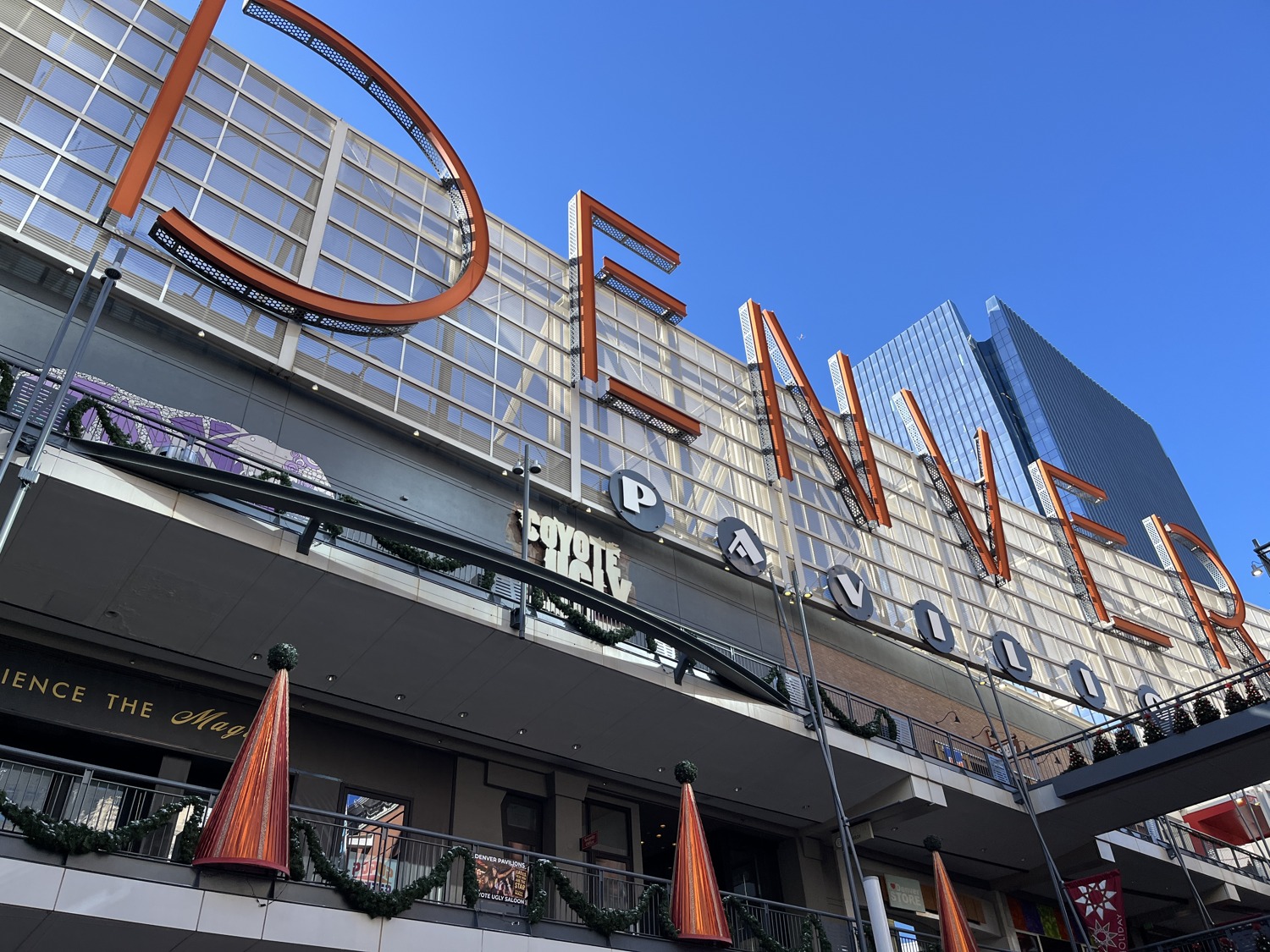
A national planning panel has recommended replacing most of Denver Pavilions with a free, regularly programmed public space, retaining the building that houses its movie theater and adding two residential towers on adjacent 15th Street parking lots.
The Denver Downtown Development Authority released the Urban Land Institute's final report on November 17. A steering committee will now evaluate the recommendations, with feasibility studies, design work and community engagement shaping the property's next chapter.
For Upper Downtown, the proposal raises a larger question about how two prominent blocks on 16th Street can support a neighborhood throughout the day and evening. The panel puts housing, arts and a public gathering place at the center of that strategy.
What the panel wants to change
The report's concept would remove three of the Pavilions' four main buildings and keep the L-shaped building on the east corner of the site, which includes the theater. A public space would take over much of the remaining footprint, with markets, music, film and civic events giving people reasons to spend time there.
The retained building could provide indoor activity through winter and bad weather. The panel suggests local food and retail uses at street level, arts or cultural uses on the largely vacant second floor, and expanded community programming around the theater.
On the surface parking lots facing 15th Street, the panel proposes two residential towers. Its argument is that more people living nearby would give restaurants, shops and public spaces a steadier base of daily users. The city says market conditions will determine the eventual development on those lots.
The report treats the open space, retained building and housing as parts of one coordinated development. Their final size, layout and mix of uses would go through further testing and community input.
Why the recommendation centers on residents
The Pavilions opened in 1998 as a multilevel retail and entertainment center. The DDDA acquired it and the two adjacent surface lots in December 2025, bringing the properties under common ownership.
The ULI panel links the site's difficulties to hybrid work, the loss of regular office-worker traffic and a retail layout that draws customers away from the street and onto upper floors. Its recommendation builds on a different source of activity: people who live downtown and use the area beyond office hours.
That reasoning also shapes its advice on ownership. The panel recommends that the DDDA retain control in the near term and explore a public-private partnership that shares development costs and risk while keeping public goals central to the project.
Costs and construction depend on the next phase
The report estimates the overall concept at roughly $498 million to $615 million across demolition and construction. It places demolition and site work at $8 million to $15 million and the proposed park at $40 million to $50 million. Those figures describe the panel's proposed development program; a project budget and financing plan would emerge through later work.
The panel proposes an initial planning and interim-activation phase, followed by delivery of the public space and first housing tower together. A second tower would follow in a later phase. It also recommends studying whether revenue from the Pavilions' underground parking garage could support financing.
In its November 17 release, the city tied any demolition to a future redevelopment and identified a steering committee as the next step. Tenants' leasehold interests and continued property maintenance remain DDDA priorities.
The authority says it has invested more than $3 million in capital improvements since May, including parking technology, roof and conveyance repairs and a mural along 15th Street. Exhibits, music and temporary uses have also continued at the property.
For residents and nearby businesses, the next meaningful milestone is the steering committee's evaluation: how much public space and housing the site can support, how the work would be financed and how existing activity can continue through redevelopment.
Sources
- City and County of Denver, November 17 final report release: Source
- ULI final report, panel April 12-17, 2026; summary and pages 21-24 and 41-48: Report
- Denverite, November 17 independent reporting: Source
- File photo, December 28, 2025, AnotherBeliever: Wikimedia Commons source, CC BY-SA 4.0. Resized.