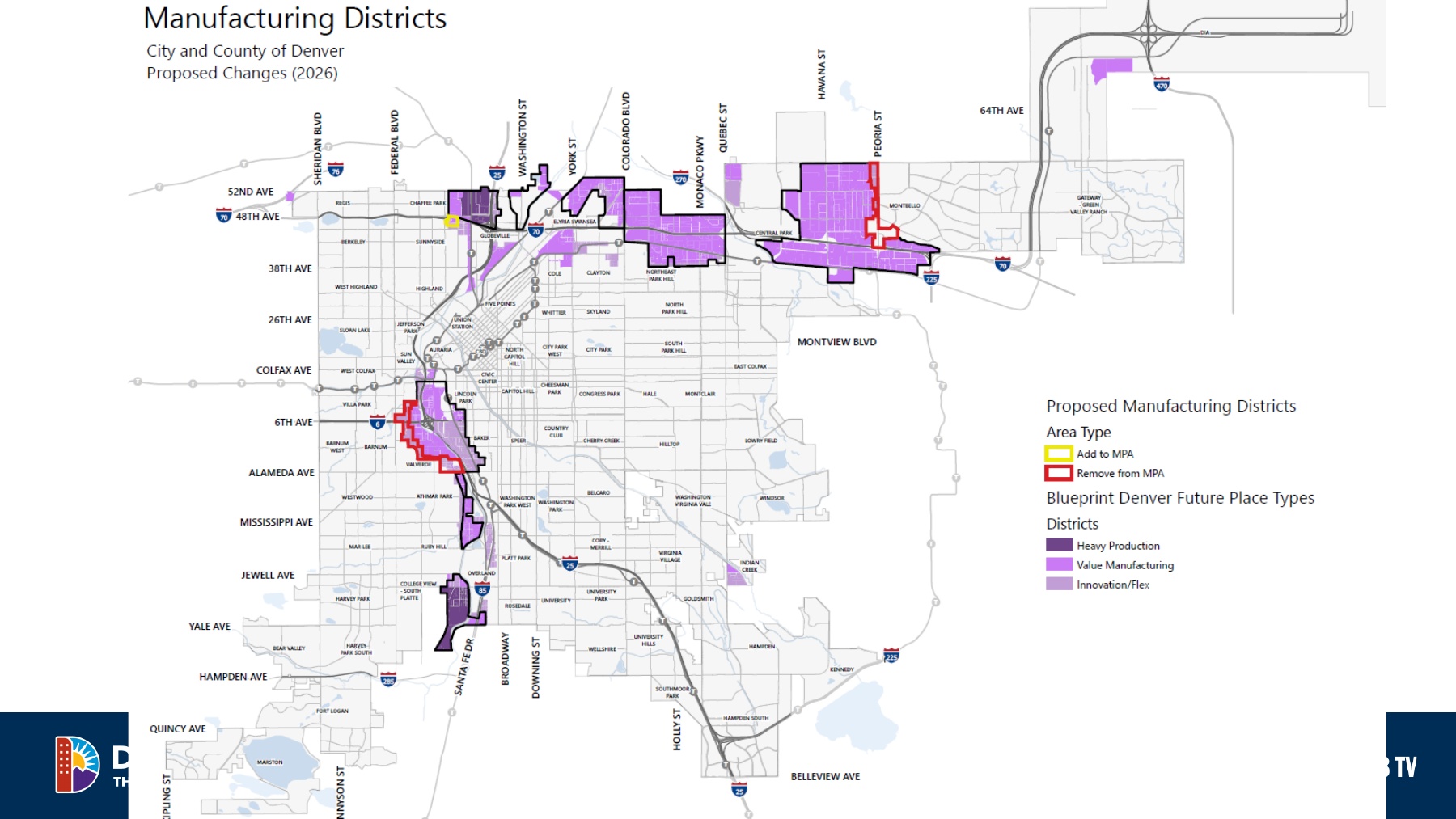
Denver planners are proposing a technical update to Blueprint Denver that would sharpen guidance for industrial areas, refresh transportation and equity maps, and formally connect the city's land-use framework with its One Water Plan.
The two proposals, bills 26-1723 and 26-1724, appeared on the Nov. 17 Community Planning and Housing Committee agenda. They would become supplements to Comprehensive Plan 2040 if adopted by City Council.
For residents following where homes and jobs may go, the industrial guidance is a central change. The water proposal also connects growth planning with conservation, water supply and watershed management. A Nov. 12 staff report describes the package as a limited update reflecting existing policies and meeting state requirements.
Where industrial housing fits
Blueprint Denver guides major land-use and transportation decisions across the city. Its current version was adopted in 2019, building on a citywide plan first adopted in 2002.
The proposed update clarifies how industrial place types relate to manufacturing-preservation policies and neighborhood plans. The staff presentation describes three distinctions:
- Innovation/Flex areas would continue to have limited residential uses, consistent with neighborhood plans.
- Value Manufacturing areas would allow residential uses in special circumstances.
- Manufacturing Preservation Areas would be aligned with the future-places map and neighborhood-plan guidance.
The package also aligns industrial guidance with the Far Northeast plan amendment. These distinctions matter when residents read a future-land-use map or follow a rezoning proposal: the named industrial categories carry different guidance for housing and employment uses.
The documents describe policy guidance used in later land-use decisions. A specific property's zoning, permitted uses and any proposed rezoning still need their own records checked.
What changes on transportation and equity maps
The update would bring pedestrian, bicycle and transit priorities into line with Denver Moves planning and current transportation-department practice.
Pedestrian priorities would reflect mixed-use areas and community-priority routes. Bicycle priorities would follow Denver Moves Bikes, while transit priorities would use the categories in Denver Moves Everyone, according to the presentation.
Equity measures would also change. The Access to Opportunity measure would move from a 50-acre grid to census tracts and parcels. The city would remove childhood obesity and life expectancy from that measure because of data availability.
Planners also propose correcting mismatches between neighborhood context and future place designations in Athmar Park and Overland, updating references to more recent plans, refreshing growth projections and making accessibility changes.
Why water is part of the package
Denver completed its One Water Plan in 2021. The proposal would formally adopt that existing framework as a supplement to Comprehensive Plan 2040, while retaining its recommendations.
The framework covers conservation, reuse, drought and climate resilience, water quality, and coordination between land use and water management. The staff report describes it as a guide for long-term investments and cooperation among agencies.
According to the report, Denver Water's Oct. 5 letter concludes that its collection and treatment capacity can support the development anticipated in Blueprint Denver through 2040. The report also says the city has coordinated with the Colorado Department of Local Affairs on the plan's state-law requirements.
Staff say SB24-174 requires municipalities with comprehensive plans to include strategic-growth and water-supply elements by Dec. 31, 2026. Updating Blueprint and adopting One Water are Denver's proposed route to meeting those requirements.
The review dates to follow
The Planning Board approved both plans with 8-0 votes after an Oct. 21 hearing, according to the Nov. 12 staff report. Its approval included a condition that the documents be edited for clarity and correctness.
The staff presentation lists Monday, Nov. 30 for City Council first reading and Monday, Dec. 7 for a Council public hearing. Those are the proposed schedule in the committee materials; residents should check the city's current meeting record before making plans to attend.
As of this article's review, the official Nov. 17 committee record listed draft minutes and said action results were unavailable. The materials establish the proposals and staff's recommended path forward. A recorded committee action and later Council adoption will each have their own entries in the legislative record.
The city's Blueprint Denver page provides background on the update. The committee's staff report, presentation and redline draft give readers the detail needed to compare the proposed changes with the 2019 plan.